
Caring & Preservation for your Purchased Art: Interactive Guide
Updated: Aug 31
Indigenous art carries more than beauty. A Pueblo pot, a carved figure, a woven basket, a beaded item, or a piece of Native jewelry may hold artistic skill, family history, community knowledge, and cultural meaning. Caring & Preservation for these works is not only about keeping them clean. It is about slowing damage, preserving context, and treating each piece with the respect it deserves.
For collectors, families, and visitors who love Native art, the first rule is simple: do less, but do it carefully. Many objects are damaged not by age, but by well-meaning cleaning, overhandling, direct sunlight, unstable storage, harsh chemicals, or display choices that slowly weaken materials over time. Museum care begins with patience, observation, and restraint.
Why Caring & Preservation Matters
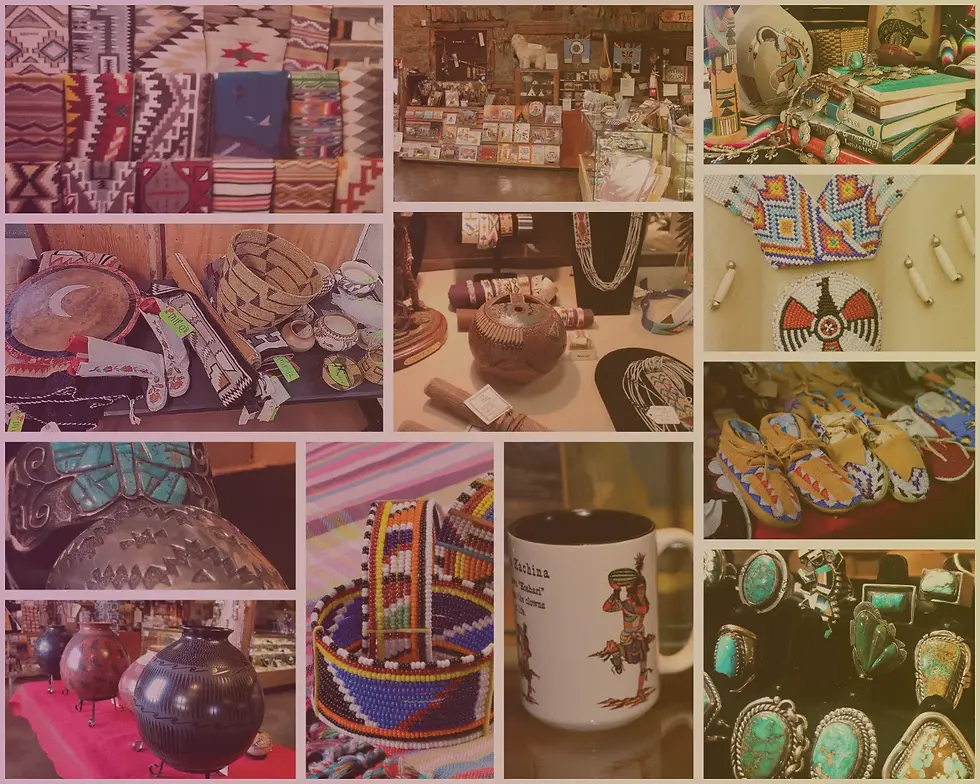
Indigenous art is often made from natural, handmade, or mixed materials. Clay, shell, stone, silver, turquoise, coral, wood, hide, fiber, glass beads, feathers, pigments, plant materials, and commercial materials may appear together in a single object. Each material reacts differently to light, moisture, heat, oils from hands, dust, and cleaning products.
That is why there is no single “safe cleaner” for Native art. A method that seems harmless on one material may stain, loosen, corrode, dissolve, or crack another. A pottery vessel, for example, should not be treated the same way as a painted figure, a silver-and-stone bracelet, a basket, or beadwork attached to cloth or hide.
Respectful care begins by asking: What is it made of? Is it stable? Is there paint, pigment, adhesive, repair, stringing, leather, fiber, stone, shell, or metal? Does it have ceremonial, family, or cultural sensitivity? If the answer is unknown, the safest choice is to avoid cleaning beyond very gentle dust removal and to seek professional guidance.
Start With Documentation
Before cleaning, moving, or displaying any piece, owners should document what they know. This does not need to be complicated, but it should be consistent. Record the artist’s name, tribal affiliation or community if known, purchase source, date acquired, materials, dimensions, condition notes, and any certificates, receipts, appraisals, or artist statements.
Photographs are also important. Take clear images of the front, back, bottom, signature, hallmark, damage, repairs, and any labels. Good documentation protects the history of the piece and helps future family members, museums, conservators, or appraisers understand what they are seeing.
For Indigenous art, documentation is not only financial. It helps preserve cultural context. A piece without its artist, community, story, or material information loses part of its voice.
Handling: Clean Hands, Fewer Moves, Better Support
Many fragile objects are damaged during handling, not while sitting on display. Before moving pottery, figures, baskets, jewelry, or beadwork, clear a stable surface and remove anything that could catch, scrape, or knock the piece over. Rings, bracelets, watches, long sleeves, and loose cords can cause accidental damage.
Clean, dry hands are often better than bulky gloves when grip matters, but gloves may be appropriate for metals, polished surfaces, photographs, ceramics, or delicate finishes. Nitrile gloves can help prevent oils and salts from transferring from skin to metal or porous surfaces. Cotton gloves can sometimes snag on rough surfaces, beadwork, basketry, or broken edges, so they are not always the best choice.
When lifting pottery or figurines, never pick them up by handles, rims, spouts, arms, heads, feathers, attachments, or repaired sections. Support the object from the strongest area, usually the base and body. Jewelry should be lifted by its main structure, not by a chain, stone setting, clasp, or fragile strand.
Cleaning: The Safest Method Is Usually the Least Aggressive
The safest cleaning is dry, gentle, and limited. Dust can hold moisture and pollutants, so light dusting can be helpful, but aggressive cleaning can do more harm than leaving the object alone.
For many stable ceramics, glass, stone, and metal objects, a soft natural-bristle brush can remove loose surface dust. Work slowly, and brush dust away from fragile edges, painted surfaces, repairs, beadwork, inlay, and loose attachments. A clean microfiber cloth may be safe for some smooth surfaces, but it can snag on rough pottery, beadwork, baskets, or raised decoration.
Avoid household cleaners, furniture polish, bleach, vinegar, lemon juice, abrasive powders, silver dips, alcohol wipes, acetone, oils, waxes, and “all-purpose” sprays. These products are made for household surfaces, not cultural materials. They may strip patina, dissolve coatings, stain porous clay, loosen repairs, remove pigments, corrode metals, or permanently alter the surface.
Pottery and Ceramic Pieces
Pottery should be handled with special care because it can be both durable and fragile at the same time. Fired clay may last for centuries, but rims, handles, repaired cracks, painted surfaces, and porous areas can be easily damaged.
For stable pottery, gentle dusting with a soft brush is usually enough. Avoid soaking pottery, especially if it is low-fired, porous, painted, previously repaired, or has unknown surface treatments. Do not place water inside a vessel and do not use it as a vase, planter, food bowl, candle holder, or incense holder unless it was specifically made for that use by the artist.
If a ceramic piece is cracked, flaking, powdery, repaired, salt-encrusted, or painted with delicate pigments, do not clean it. Photograph the condition and consult a conservator. Attempting to “improve” the appearance can permanently reduce both the cultural and material integrity of the work.
Pottery care notes
Keep pottery away from edges, unstable shelves, pets, children, and high-traffic areas.
Use padded supports or museum putty only when appropriate and only in small, discreet amounts.
Do not scrub painted designs, signatures, labels, or mineral deposits.
Do not place pottery in a dishwasher, sink, microwave, oven, or direct heat.
Do not attempt to glue broken pottery without conservation advice.
Figurines, Carvings, and Painted Objects
Figurines and carved objects often include delicate projections, painted surfaces, feathers, fibers, hair, fabric, shell, or applied materials. These details are often the first areas to break, fade, or loosen.
Dust these pieces only when they are stable. Use a soft brush and avoid pressure. Never use a wet cloth on painted, matte, chalky, or porous surfaces. Moisture can spread pigments, darken surfaces, stain wood or clay, and loosen older adhesives.
Display is especially important for figurines and carvings. They should sit on a stable shelf, away from direct sun, fireplaces, vents, bathrooms, kitchens, and windows. Temperature swings and moisture can cause swelling, cracking, warping, corrosion, or adhesive failure.
Jewelry, Silver, Turquoise, Coral, Shell, and Beadwork
Native jewelry often combines metal with stones, shell, coral, glass, leather, fiber, or adhesive. That mixed-material structure makes cleaning more complicated than people assume. Silver polish may affect stones. Liquid cleaners can seep behind settings. Ultrasonic cleaners can loosen inlay, damage porous stones, or shake apart older repairs.
For many pieces, a soft dry cloth is enough to remove fingerprints after wear. If silver is tarnished, resist the urge to over-polish. Tarnish removal changes the surface, and heavy polishing can soften stamped designs, remove intentional patina, and reduce detail over time. When jewelry includes turquoise, coral, shell, jet, opal, lapis, or inlay, avoid liquid dips and chemical cleaners.
Jewelry should be stored dry, separated, and supported. Do not pile pieces together in a box where stones and silver can scratch each other. Use individual soft cloth bags, acid-free tissue, or divided storage. Keep jewelry away from perfume, lotion, hairspray, sunscreen, chlorine, salt water, and household cleaning products.
Jewelry care notes
Put jewelry on after lotions, perfume, sunscreen, and hair products have dried.
Wipe gently with a soft dry cloth after wearing.
Store pieces individually to prevent scratches and broken settings.
Avoid ultrasonic cleaners, silver dips, toothpaste, baking soda scrubs, and chemical tarnish removers.
Ask a professional before cleaning older, valuable, repaired, or mixed-material jewelry.
Baskets, Textiles, Beadwork, and Organic Materials
Basketry, textiles, beadwork, leather, feathers, wood, and plant materials are more sensitive to light, humidity, pests, and handling than ceramics or stone. These materials can fade, dry out, crack, distort, attract insects, or become brittle.
Do not wash baskets, textiles, or beadwork. Water can stain fibers, loosen dyes, swell materials, rust hidden metal parts, or distort the shape. Vacuuming should only be done with caution, using a screen barrier and low suction, and only when the object is stable. For most private collectors, light dusting and careful display are safer than cleaning.
Organic materials should be kept away from direct sunlight and high humidity. They should not be displayed in bathrooms, kitchens, garages, sheds, or damp rooms. If there are signs of insects, powder, webbing, droppings, loose fibers, mold, or a musty smell, isolate the object and contact a museum professional or conservator.
Display: Light, Heat, Humidity, and Support
Good display is one of the most effective forms of preservation. The goal is not to hide art away, but to display it in a way that reduces long-term damage.
Avoid direct sunlight. Light damage is cumulative and cannot be reversed. Fading, yellowing, embrittlement, and surface changes happen slowly, often before owners notice. Keep sensitive objects away from windows and strong lamps, and consider rotating fragile items off display.
Avoid heat and moisture. Fireplaces, vents, exterior walls, bathrooms, kitchens, and sunny windows can create unstable conditions. Stable room temperature and moderate humidity are better than constant changes. For shelves, choose sturdy surfaces with enough depth and space around each piece. Crowded displays lead to chips, scratches, and accidents.
For pottery and figures, use stable mounts or supports when needed. For textiles and beadwork, avoid pins, nails, tape, glue, or clips that put stress on the material. Framing should use archival materials and spacing so the object does not press directly against glass.
Storage: Give Each Piece Space
Storage should protect objects from dust, pressure, pests, moisture, and accidental impact. Use clean, stable materials such as acid-free tissue, unbleached cotton, archival boxes, padded trays, or inert foam supports. Avoid newspaper, plastic wrap, rubber bands, adhesive tape, acidic cardboard, and heavily dyed fabrics.
Do not stack pottery directly on pottery. Do not hang heavy necklaces from a single strand. Do not fold textiles sharply. Do not store jewelry in humid bathrooms or hot cars. Keep records and photographs with the collection file, not taped to the object.
For families, the best storage system is one that future people can understand. Label boxes clearly, keep artist and purchase information together, and write down any stories connected to the piece.
Respect Includes Knowing What Not to Display
Some Indigenous cultural materials may be sacred, ceremonial, funerary, restricted, or community-sensitive. Not everything should be bought, sold, photographed, displayed, or handled casually. If a piece may fall into that category, care should include cultural guidance, not only physical preservation.
Responsible stewardship means asking better questions. Who made it? Was it meant for public display? Is it appropriate to photograph? Was it acquired ethically? Does it belong with a family, community, museum, or tribal nation? These questions matter because Indigenous art is connected to living peoples, not just the art market.
Authenticity and Ethical Collecting Still Matter
Caring for Indigenous art begins before the object enters a home or collection. Buyers should seek truthful information about the artist, tribal affiliation, materials, and source. Under the Indian Arts and Crafts Act, art marketed as Native-made must not misrepresent the maker or tribal identity.
Ethical collecting supports living artists and communities. It also protects buyers from imitation work that falsely uses Native names, symbols, or identities. Whenever possible, purchase directly from artists, Native-owned galleries, museum markets, tribal arts organizations, or trusted institutions that provide artist information and documentation.
When to Call a Conservator
Some problems should not be handled at home. A professional conservator should be contacted when an object is cracked, flaking, moldy, water-damaged, insect-damaged, badly tarnished, unstable, previously repaired, culturally sensitive, or financially significant. The same is true before attempting solvent cleaning, adhesive removal, polishing, stain removal, restringing, or repair.
A conservator does not simply make an object look new. Conservation focuses on understanding materials, slowing deterioration, stabilizing damage, and preserving the integrity of the work. In many cases, the best treatment is minimal intervention.
A Museum Approach to Everyday Care
The Museum of Indigenous People encourages visitors to see Indigenous art as part of living culture, not as decoration separated from its makers. Caring for Native art at home should reflect that same understanding. The goal is not to over-clean, over-restore, or erase age. The goal is to protect the piece, preserve its story, and respect the people and traditions connected to it.
Whether someone owns a small piece of jewelry, a treasured family basket, a pottery vessel, a carved figure, or a contemporary artwork, care begins with humility. Handle less. Document more. Display thoughtfully. Avoid harsh products. Ask questions. Support Native artists. When in doubt, stop before doing harm.
Indigenous art deserves to be seen, studied, and appreciated. It also deserves careful stewardship so future generations can continue learning from the artists, communities, and cultural knowledge each piece carries.
Plan your Visit
The Museum of Indigenous People is located at 147 North Arizona Avenue in Prescott, Arizona. The museum is open Monday through Saturday from 10:00 AM to 4:00 PM and is closed Sunday.

Sources & Additional Info
Association of Tribal Archives, Libraries, and Museums — Home https://www.atalm.org/
National Museum of the American Indian — Conservation https://americanindian.si.edu/explore/collections/conservation
American Institute for Conservation — Caring for Belongings https://www.culturalheritage.org/resources/public/caring
American Institute for Conservation — Find a Professional https://www.culturalheritage.org/about-conservation/find-a-conservator
American Institute for Conservation — Collections Care https://www.culturalheritage.org/resources/collections-care
U.S. Department of the Interior, Indian Arts and Crafts Board — Indian Arts and Crafts Act https://www.doi.gov/iacb/act
Federal Trade Commission — Buying American Indian Arts and Crafts https://consumer.ftc.gov/articles/buying-american-indian-arts-and-crafts
National Park Service — Conserve O Grams / Museum Collection Care https://www.nps.gov/subjects/museums/conserve-o-grams.htm
National Park Service — Museum Handbook Part I: Museum Collections https://www.nps.gov/subjects/museums/mh1.htm


