
Indigenous People's Day: Yesterday, Today, & Tomorrow
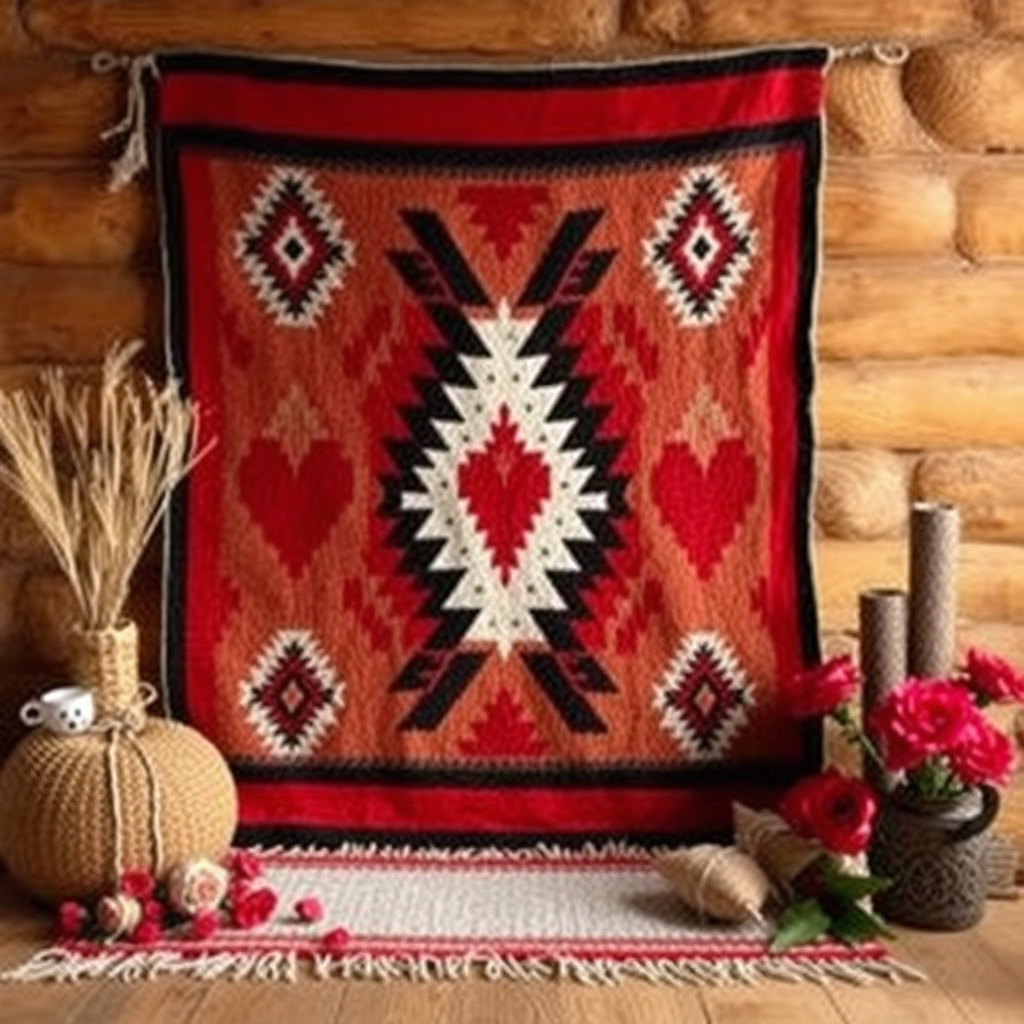

On Monday, October 12, 2026, the Museum of Indigenous People will celebrate Indigenous Peoples’ Day with Native artists and artisans, cultural performances, traditional music and dance, community gathering, and free admission for all visitors. The celebration is part of a much larger story about how Indigenous people have worked to change the way the history of the Americas is remembered and how Native cultures are understood today.
For many people, the second Monday in October was taught almost entirely through the story of Christopher Columbus. Indigenous Peoples’ Day asks people to look at that history from a wider perspective, one that begins before 1492 and continues into the present.
“Sovereignty is to have control over your own vision for the future... to absolutely determine your own destiny.” — Wilma Mankiller, Principal Chief of the Cherokee Nation, 1985–1995
Indigenous Peoples' Day: The History Did Not Begin in 1492
When Columbus reached the Caribbean in 1492, he arrived in a world already inhabited by Indigenous peoples with their own communities, languages, political systems, economies, spiritual traditions, agriculture, arts, and relationships to the land and water. The Taíno peoples Columbus encountered were not part of a newly discovered world. They were part of established Indigenous societies whose histories stretched back generations.
Across the Americas, Indigenous nations had developed their own systems of government, trade, food production, architecture, engineering, medicine, art, and cultural knowledge long before European ships arrived. There was never one Indigenous culture or one Indigenous history.
European colonization brought enormous disruption. Disease, warfare, enslavement, forced relocation, land seizure, and later policies of assimilation affected Indigenous communities across the hemisphere. Yet describing Indigenous history only through what was lost creates another incomplete story.
Native nations survived. Languages, families, governments, ceremonies, artistic traditions, knowledge, and relationships to place continued, sometimes openly and sometimes despite tremendous pressure to erase them. That survival and continuation are important parts of the history behind Indigenous Peoples’ Day.
Changing the Story
Indigenous people have long challenged celebrations that placed Columbus at the center of American history. In 1977, participants at the International Conference on Discrimination Against Indigenous Populations in the Americas proposed an observance recognizing Indigenous peoples. South Dakota began observing Native Americans’ Day in 1990, and Berkeley, California, formally recognized Indigenous Peoples’ Day in 1992.
Since then, the observance has spread through cities, states, schools, universities, museums, and communities across the country. The larger change has been about more than replacing one name with another. It has been about recognizing that Indigenous people should have a voice in how their own histories are remembered.
That idea also has a very local history.
“They may have all the guns and they may have all the racist laws and judges... but that is not power.” — John Trudell, 1980 We Are Power
A Museum Learning From Its Own Past
Long before Prescott was established, Yavapai people lived throughout this region. Their history reaches far beyond the founding of the city or the museum that stands here today.
The building now occupied by the Museum of Indigenous People opened in 1935 as the Smoki Public Museum. It was associated with the “Smoki People,” a non-Native organization formed in Prescott in 1921 whose members created and performed their own versions of Native dances and ceremonies.
Among those performances were reenactments based on sacred Hopi ceremonial practices. The performers were not Hopi. They were largely white Prescott residents assuming a Native identity and presenting Indigenous traditions through their own interpretation.
For decades, the performances continued. Then Indigenous people made clear that this representation was not theirs.
In 1990, a delegation from the Hopi reservation protested the way Hopi traditions were being portrayed. The ceremonial held on August 11 of that year became the last Smoki ceremonial.
That protest became an important point in the museum's history. The people whose culture was being represented spoke for themselves, and eventually the institution had to listen.
The museum became an independent nonprofit in 1991. Over the following years, it began reconsidering its relationship with Indigenous communities and the responsibility that comes with caring for Indigenous cultural materials. In February 2020, the Smoki Museum became the Museum of Indigenous People, part of what the museum describes as a continuing decolonial transformation.
Changing the name did not erase what came before it. It acknowledged that the museum needed to move in a different direction.
“Preserving Indigenous culture cannot mean speaking for Indigenous people.” — Manuel Lucero, Executive Director, Museum of Indigenous People
That idea is important to the museum's work today. Stewardship is not simply preserving baskets, pottery, textiles, photographs, or archaeological materials. Those objects remain connected to living communities.
Native artists continue to create. Languages continue to be taught. Tribal governments govern. Ceremonies continue. Communities protect cultural knowledge while also deciding how traditions change, what should be shared, and how their own stories should be told.
MIP's responsibility is therefore not only to care for the past, but to build relationships with the people whose cultures continue in the present. Native staff, advisors, artists, educators, and community partners increasingly contribute to how the museum interprets and shares Indigenous histories.
Inclusion and integrity are central to that work. The museum cannot change where it came from, but it can allow that history to shape how it moves forward.
Why Indigenous Peoples’ Day Matters at MIP
Indigenous Peoples’ Day has a particular meaning here because the museum's own history reflects many of the questions behind the observance.
Who gets to tell Indigenous history? Who interprets culture? Who is heard?
For MIP, the answers have changed.
The museum now has an opportunity to use the same place differently: to support Native artists, listen to Indigenous communities, care for cultural materials responsibly, and help visitors understand that Indigenous culture is not something frozen in the past.
On Monday, October 12, 2026, that work comes together through Native arts and artisans, cultural performances, traditional music and dance, and community gathering.
Admission is free for all visitors.
Indigenous Peoples’ Day is a time to remember what came before, but it is equally important to recognize what continues. Indigenous people are still creating, teaching, speaking, governing, adapting, and carrying their cultures forward.
For the Museum of Indigenous People, honoring that continuity also means continuing to listen.
For more information, call 928-445-1230 or email info@museumofindigenouspeople.org.


