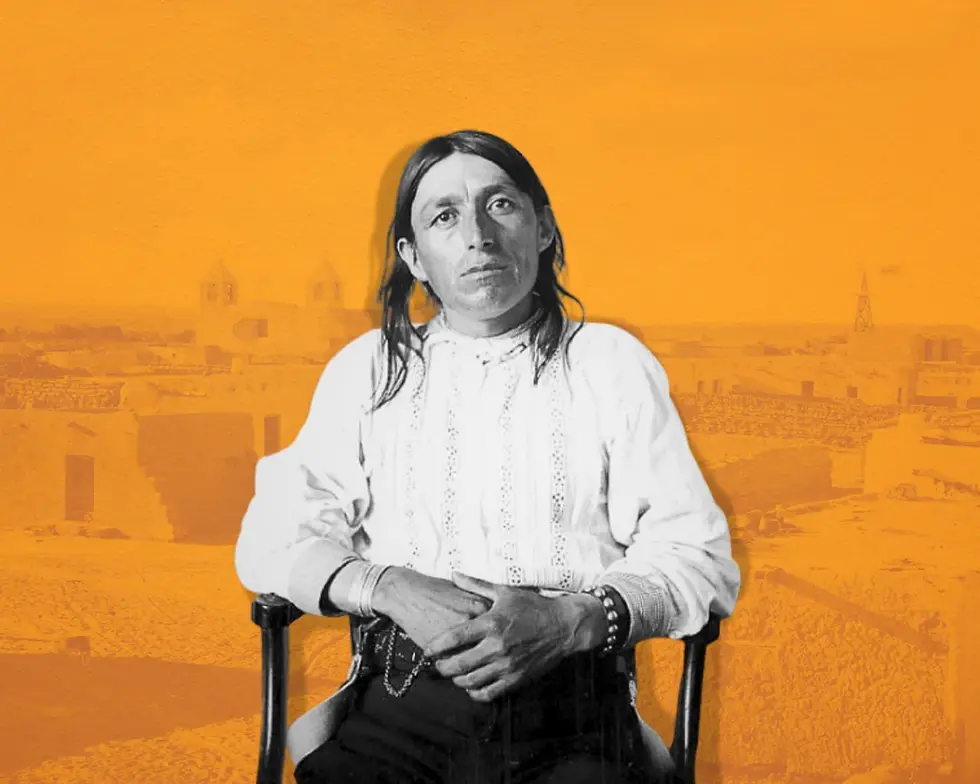
Mary Golda Ross: Cherokee Engineer Who Helped Shape the U.S. Space Program

Updated: Aug 28
A Pioneer of Indigenous Women in Aerospace
Mary Golda Ross (Cherokee, 1908–2008) holds a remarkable place in American scientific history. She was the first known Native American woman to work as an aerospace engineer and one of the earliest women involved in the United States’ air and space programs. Her work helped shape early research into satellites, interplanetary travel, and the technologies that would eventually support modern space exploration.
Ross was born in Park Hill, Oklahoma, within the Cherokee Nation. She grew up in a family that valued education, curiosity, and problem-solving. A descendant of Cherokee Chief John Ross, she carried forward a legacy of leadership and perseverance.
After earning a degree in mathematics, Ross began her career as a teacher during the Great Depression. While teaching in Oklahoma, she continued her studies and eventually earned a master’s degree in mathematics. Her deep understanding of mathematics and analytical thinking would soon lead her into one of the most innovative fields of the twentieth century.

From Classroom to Aerospace Engineering
During World War II, the demand for engineers and mathematicians expanded rapidly across the United States. Ross was recruited to work for the Lockheed Corporation, where her skills were applied to aviation research.
At Lockheed, she worked on studies examining the effects of high-altitude flight on aircraft performance, including research connected to the P-38 Lightning fighter aircraft. Her ability to solve complex engineering problems quickly set her apart.
At the end of the war, many women who had been hired during wartime were laid off as industries shifted back to peacetime production. Ross’s talent, however, was too valuable to lose. Instead of releasing her, Lockheed sent her to the University of California, Los Angeles (UCLA) to complete certification as a professional engineer.
This decision opened the door for Ross to become part of one of the most advanced aerospace engineering teams in the country.

A Founding Engineer of Lockheed’s Skunk Works
After completing her engineering training, Ross joined Lockheed’s highly secretive Skunk Works division. This elite group of engineers worked on cutting-edge aerospace research and experimental aircraft programs.
Ross became one of the forty founding engineers within the division. In this role, she worked on theoretical and conceptual designs for technologies that were far ahead of their time.
Her work included research and design concepts for:
Interplanetary space travel
Earth-orbiting spacecraft
Early satellite technology
Both manned and unmanned spaceflight systems
Because Skunk Works projects often involved national defense and advanced aerospace technologies, much of Ross’s work remains classified. As a result, the full extent of her contributions may never be completely known.
Contributions to Early Space Exploration
Ross’s mathematical expertise contributed directly to research that helped guide the early U.S. space program.
In 1963, she helped write sections of NASA’s Interplanetary Flight Handbook, Volume III. This handbook explored spacecraft trajectories and mission planning for travel to Mars and Venus. The work became an important reference for scientists and engineers studying how spacecraft could travel beyond Earth’s orbit.
The calculations and design concepts developed during this era laid the groundwork for later planetary missions and satellite systems.
Ross’s work demonstrated that Indigenous scientists were contributing to the most advanced technological research of their time.
Mary Golda Ross, A Legacy of Quiet Achievement
Mary Golda Ross retired from Lockheed in 1973 after a long and influential career in aerospace engineering. Despite her groundbreaking work, she remained humble about her accomplishments.
A story shared by one of her nieces illustrates her quiet character. The niece once discovered Ross’s photograph in a pamphlet celebrating women in science. Excited, she called her aunt to share the news.
Ross simply replied, “Oh really?”
Her modest response reflected a lifelong focus on the work itself rather than recognition.
Indigenous Perspectives on the Cosmos
Today, Mary Golda Ross is recognized as a trailblazer for both Native Americans and women in science and engineering. Her story reminds us that Indigenous knowledge and curiosity have long engaged with the mysteries of the universe.
Visitors can learn more about Indigenous perspectives on the cosmos and the contributions of Native scientists through the ANI~NOQUISI – Star Nation exhibition at the Museum of Indigenous People in Prescott, Arizona.
The Cherokee word Ani~Noquisi translates to “Star Nation” or “Star People.” The exhibit explores how Indigenous cultures have understood the night sky for generations through stories, science, and artistic expression. It also highlights modern Native scientists and engineers who continue to explore space today.
CONTRIBUTIONSThe new special exhibit at the Museum of Indigenous People runs from February 13th to July 31st, 2026 For more about the exhibit: |  |
Source and additional reading
Wikipedia — Mary Golda Ross
Oklahoma Historical Society — The Encyclopedia of Oklahoma History and Culture
https://www.okhistory.org/publications/enc/entry?entry=RO041
PBS News Weekend — The cutting-edge work of Native American aerospace engineer Mary Golda Ross https://www.pbs.org/newshour/show/the-cutting-edge-work-of-native-american-aerospace-engineer-mary-golda-ross
Photos from NASA