
Native American Contributions to America’s Game
Updated: Jul 9
Baseball may be known as America’s Game, but its story cannot be told without recognizing the presence and contributions of Native American baseball players.
Across the United States, Indigenous communities embraced the game early onplaying on community fields, at boarding schools, and even in places shaped by hardship and displacement. From local teams to Major League stadiums, Native athletes helped shape the spirit of the game.
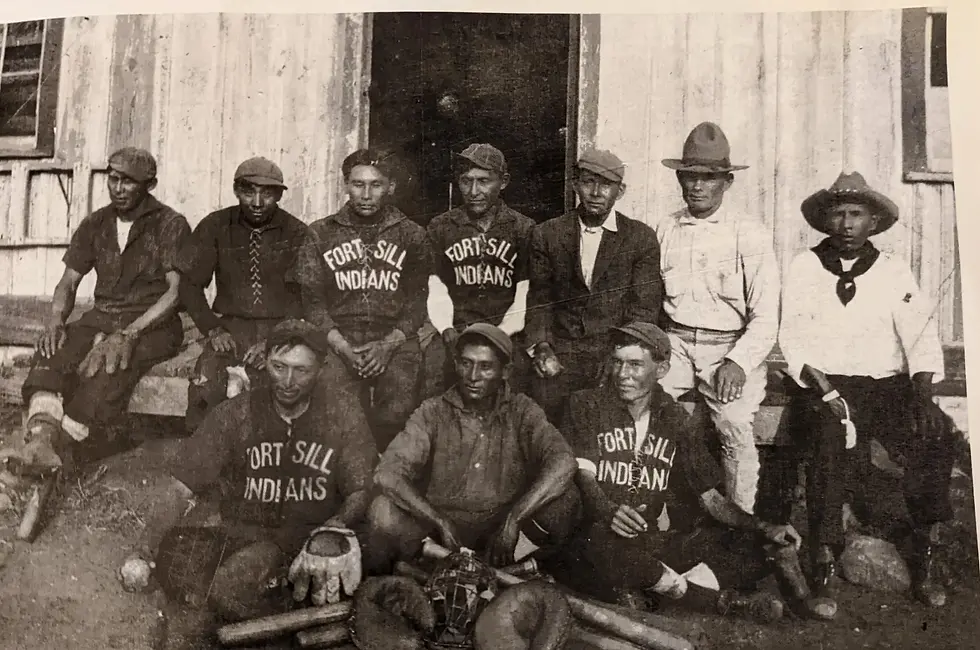
Photographs such as the historic Fort Sill Apache baseball team capture one of the most powerful chapters of this story. These players were members of the Chiricahua Apache community who were held as prisoners of war in Oklahoma after defending their homelands in the Southwest.
Even under those circumstances, baseball became a way to build community, maintain dignity, and create moments of normal life. The game was not simply entertainment. It became a symbol of resilience.
Baseball at Boarding Schools
During the late nineteenth and early twentieth centuries, baseball spread rapidly through federal Indian boarding schools such as the Carlisle Indian Industrial School, Haskell Institute, and Chilocco Indian School.
These institutions were part of a government system designed to erase Indigenous languages and traditions. Yet Native students adapted the game and made it their own.
Teams from these schools often played competitive games against colleges and local clubs, drawing large crowds and attention from sports fans across the country.
For many Indigenous players, baseball became both a competitive sport and a way to build identity and pride within Native communities.
Native Players and the Hall of Fame Legacy
The legacy of Indigenous baseball players can also be seen in the conversation surrounding the National Baseball Hall of Fame and Museum. One Native American player firmly recognized in Cooperstown is Chief Bender, an Ojibwe pitcher who was inducted into the Hall of Fame in 1964. Other players connected to Native ancestrysuch as Zack Wheat, John Tortes Meyers, and Allie Reynolds, who continue to appear in discussions about the broader history of baseball and its overlooked pioneers. Their stories remind fans that Indigenous athletes were present throughout the early decades of professional baseball.
Jim Thorpe: A Legend of Indigenous Athletics
Among the most celebrated Indigenous athletes in history is Jim Thorpe, whose Sac and Fox name Wa-Tho-Huk means “Bright Path.”

Thorpe’s athletic career remains one of the most extraordinary ever recorded. While attending Carlisle Indian School under the coaching of Glenn “Pop” Warner, his talent quickly became impossible to ignore. He dominated nearly every sport he attempted track and field, football, basketball, and baseball.
In 1912, Thorpe stunned the world at the 1912 Summer Olympics, winning two gold medals in the pentathlon and decathlon and becoming the first Native American Olympic champion.
But Thorpe’s athletic story did not stop there. He went on to play professional baseball for the New York Giants, showing that his remarkable abilities extended far beyond the track. To this day, many historians and sports writers still regard Jim Thorpe as one of the greatest all-around athletes who ever lived.
Louis Sockalexis: A Native Pioneer in Major League Baseball

Another remarkable figure in the history of Native American baseball players is Louis Sockalexis, a member of the Penobscot Nation. When Sockalexis joined the Cleveland Spiders in 1897, he became one of the earliest Native American players to compete in Major League Baseball.
Sockalexis quickly gained a reputation as an exciting player with powerful hitting, a strong throwing arm, and remarkable speed in the outfield. Fans packed stadiums to watch him play.
But his success also exposed him to racism and harassment from opposing crowds reminding us that Native athletes were often forced to compete not only against other teams, but against prejudice as well. Even so, Sockalexis helped open the door for future generations of Indigenous athletes.
Why These Stories are important to America’s Game
Museums and cultural institutions are increasingly working to bring these stories back into the public conversation. Exhibits such as the “Baseball’s League of Nations” exhibition at the Iroquois Museum have helped highlight the history of Native baseball players from boarding school teams to the major leagues.
Remembering these players is about more than sports history. It is about restoring voices that were too often left out of the record. The photograph of the Fort Sill Apache baseball team is not simply a team portrait it is a reminder that Indigenous people continued to live, compete, and build community even during the most difficult chapters of American history.
Baseball may be America’s pastime, America’s Game.
But Indigenous athletes have always been part of the game.
And their story is still being told.
Sources & additional Reading:
Image Source Reddit: Fort Sill Indian School in Lawton Oklahoma home of the 7th cav., imprison Comanche, Kiowa, Apache.
ICT News (Indian Country Today) — A Salute to Native Baseball Players
Iroquois Museum — Baseball’s League of Nations Exhibition
Society for American Baseball Research — research and articles on Native American players in early professional baseball.
National Baseball Hall of Fame and Museum — historical records and biographies of Major League Baseball players.
National Museum of the American Indian — articles and historical perspectives on Indigenous athletes and baseball.
American Indian Magazine — Real Indians Played Baseball
Home Plate Don’t Move — Was the Cyclone Native American?
WABI-TV — This Day in History: Louis Sockalexis Signs with the Cleveland Spiders
Library of Congress – Jim Thorpe, Native American Athlete: Topics in Chronicling America
America 250 Ohio – Northeast Ohio Baseball Pioneers


