
Where Did "The Beautiful Game" Come From?
Updated: Jul 7


Indigenous Ballgames, Mesoamerica, Arizona, and the Deep History of Soccer
Soccer is often called the world’s game, but its story belongs inside a much older human history of ball play. Modern soccer was formalized in 19th-century England, yet long before association football had written rules, clubs, referees, and stadiums, Indigenous peoples in the Americas were building courts, shaping rubber balls, gathering spectators, and turning athletic competition into public ceremony.
That does not mean soccer was invented in Mesoamerica. It was not. The stronger and more accurate story is that modern soccer and ancient Indigenous ballgames belong to a much larger human tradition: people using a ball, a playing space, a crowd, and shared rules to create skill, identity, community, and meaning.
"Beautiful Game" Modern Soccer Has Its Own History
Modern soccer, or association football, developed from earlier forms of football played in Britain and was standardized in England in 1863. That year, The Football Association helped create a unified code of rules that separated association football from other football traditions, including rugby-style games that allowed more handling and physical contact.
That modern history matters because it keeps the story honest. Mesoamerican ballgames were not early soccer, but they do reveal something just as important: organized ball play in Indigenous America has a deep and sophisticated history of its own.
One of the Oldest Ballgame Traditions in the Americas
The Mesoamerican ballgame was one of the oldest and most culturally significant ballgame traditions in the Americas. It was played across many cultures, including Maya, Aztec, Mixtec, and other Mesoamerican peoples, with regional differences in rules, court design, equipment, and meaning. Rather than one fixed rulebook, the ballgame was a living tradition that changed across time and place.
The Metropolitan Museum of Art notes that some of the earliest evidence includes a ballcourt at Paso de la Amada dating to about 1400 B.C., along with rubber balls from El Manatí dating to approximately 1600 B.C. More than 1,500 ballcourts have been identified across Mesoamerica, showing that this was not a small or isolated practice. It was a major part of public life across a wide cultural landscape.
What the Game Looked Like

The Mesoamerican ballgame was usually played with a solid rubber ball, not an inflated ball like modern soccer. In many versions, players used their hips, thighs, torso, or other parts of the body to keep the ball in motion. Hands and feet were often restricted, although rules varied widely by region and period.
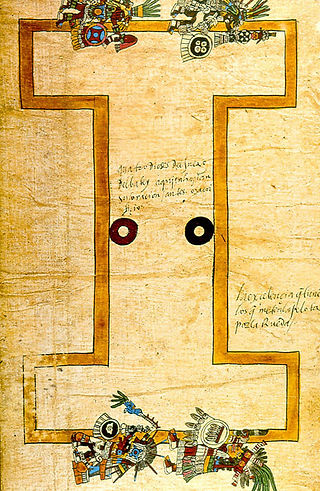
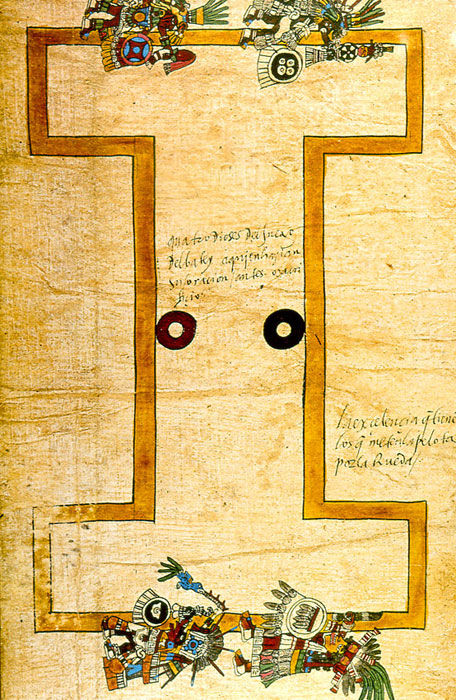
Courts were formal spaces, often narrow and carefully designed. Some were shaped like a capital “I,” while others had open or enclosed end zones, markers, side walls, or rings. In some versions, the object was to keep the ball alive in play; in others, players may have tried to strike markers or move the ball through stone rings.
Because the game changed across time and place, it is best understood as a family of related ballgame traditions rather than one single sport with one universal rulebook. That variety is part of what makes the story so rich. It shows that Indigenous ballgames were not static; they moved, adapted, and carried different meanings in different communities.
Arizona Belongs in This Story
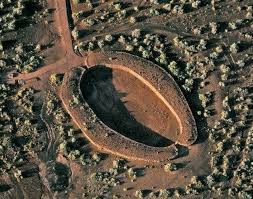
The story also reaches into the U.S. Southwest. Arizona is not a side note; it is part of the wider history of Indigenous ballcourt traditions. The Salt River Pima-Maricopa Indian Community notes that more than 200 ballcourts have been discovered in Arizona, showing that ballgames were part of a long Indigenous landscape of gathering, competition, and ceremony.
Archaeology Southwest explains that ballcourts began appearing in the Hohokam world around A.D. 750 and, with some exceptions, were generally no longer used after about A.D. 1075. These courts show that Indigenous communities in the Southwest created formal spaces for public gathering and ball play centuries before European arrival. For a museum in Arizona, this connection matters because it brings the conversation close to home and helps visitors see the Southwest as part of a much deeper history of Indigenous innovation.
Huhugam, Hohokam, and Respectful Language
The wording also matters. Contemporary O’odham people use the term Huhugam for their ancestors, while archaeologists often use Hohokam to describe a set of material traits found across southern Arizona. Both terms appear in public history and archaeology, but they do not mean exactly the same thing.
Using both terms carefully helps keep the article respectful and precise. Hohokam is common in archaeology, especially when discussing ballcourts, canals, pottery, and settlement patterns. Huhugam centers the O’odham understanding of ancestry and continuity.
For the Museum of Indigenous People, that distinction helps keep the story from sounding like it belongs only to archaeology. It also belongs to living Indigenous communities whose histories, languages, and relationships to place continue today.
Rubber, Science, and Indigenous Innovation
The ball itself is one of the most remarkable parts of the story. Rubber balls were not a European invention. Mesoamerican peoples developed sophisticated methods for making durable rubber balls from native latex-producing plants, especially plants found in southern Mexico and Central America.
This was material science. Producing a ball that could bounce, withstand repeated impact, and serve ceremonial and athletic purposes required specialized knowledge of plants, processing, and performance. That innovation belongs in the same conversation as agriculture, architecture, irrigation, astronomy, medicine, and other Indigenous technologies that shaped daily and ceremonial life.
In the case of the Mesoamerican ballgame, science and sport were not separate stories. The game depended on Indigenous knowledge: of plants, material behavior, court design, body movement, public space, and ceremonial meaning.
Modern Soccer and the Mesoamerican Ballgame
Feature | Modern soccer | Mesoamerican ballgame |
Main body use | Feet; hands mainly restricted to the goalkeeper | Often hips, thighs, torso, or other body parts; rules varied by region and time |
Ball | Inflated ball designed for kicking and rolling | Solid rubber ball made from native latex-producing plants |
Playing space | Rectangular field with goals at each end | Formal ballcourt, often narrow or I-shaped, with many regional variations |
Scoring | Put the ball into the opponent’s goal | Varied; could include keeping the ball in motion, striking markers, or passing through rings |
Team format | Eleven players per side in standard modern soccer | Varied; surviving imagery shows teams of two or more in some contexts |
Social meaning | Sport, entertainment, identity, business, and global competition | Sport plus ceremony, politics, cosmology, public gathering, and sometimes sacrifice |
Geographic scope | Global modern sport | Mesoamerica, with related ballcourt traditions extending into the Caribbean and U.S. Southwest |
This comparison should be read carefully. The Mesoamerican ballgame had many variants, and no single chart can capture every version. Still, the differences help explain why it is more accurate to call these traditions part of a deeper history of ball play rather than a direct ancestor of modern soccer.
Why This History Matters Now
Soccer’s global popularity can make it feel modern, commercial, and international, but the deeper history of ball play reminds us that the impulse behind the game is ancient. A ball, a court, a crowd, and a shared set of rules can become more than recreation. They can become a way of building community, expressing identity, testing skill, and giving public form to ideas about the world.
For the Museum of Indigenous People, this story offers a richer way to talk about the beautiful game. It honors the modern history of soccer without making a false claim about its origin. At the same time, it invites visitors to see Indigenous America as part of a much older story of sport, science, ceremony, and creativity.
The history of the beautiful game is bigger than any single nation or rulebook. By looking to Mesoamerican ballgames and Indigenous ballcourt traditions in Arizona, visitors can see how organized sport has long been a way to gather people, shape public life, and turn movement into meaning.
Related Reading
How Did the World Cup Honor Indigenous and First Nations Cultures? https://www.museumofindigenouspeople.org/post/how-did-the-world-cup-honor-indigenous-and-first-nations-cultures
Before Tires and Raincoats: The Indigenous Science of Rubber https://www.museumofindigenouspeople.org/post/before-tires-and-raincoats-the-indigenous-science-of-rubber
Sources
Metropolitan Museum of Art — The Mesoamerican Ballgame https://www.metmuseum.org/essays/the-mesoamerican-ballgame
Salt River Pima-Maricopa Indian Community — Ball Courts https://srpmic-nsn.gov/economic/springtraining/ballcourts/
Archaeology Southwest — The Hohokam Ballcourt World https://www.archaeologysouthwest.org/free-resources/fact-sheets/the-hohokam-ballcourt-world/
Archaeology Southwest — Life of the Gila: Hohokam Worlds https://www.archaeologysouthwest.org/2020/02/27/life-of-the-gila-hohokam-worlds/
Smithsonian National Museum of the American Indian — Maya Bas-Relief Depicting a Ball Player https://americanindian.si.edu/exhibitions/infinityofnations/meso-carib/240457.html
Smithsonian Magazine — Newly Unearthed Mesoamerican Ball Court Offers Insights on Game’s Origins https://www.smithsonianmag.com/smart-news/mesoamerican-ball-game-might-be-mountains-not-coast-180974422/
FIFA Museum — Origins: Meso-American Ball Games https://www.fifamuseum.com/en/explore/fifamuseumplus/blog/origins-meso-america-ball-games
National Football Museum — The Laws of the Game, 1863 https://nationalfootballmuseum.com/items/the-laws-of-the-game-1863/


