Who Gets to Tell Indigenous Stories? Blackhorse Lowe Is Changing the Answer

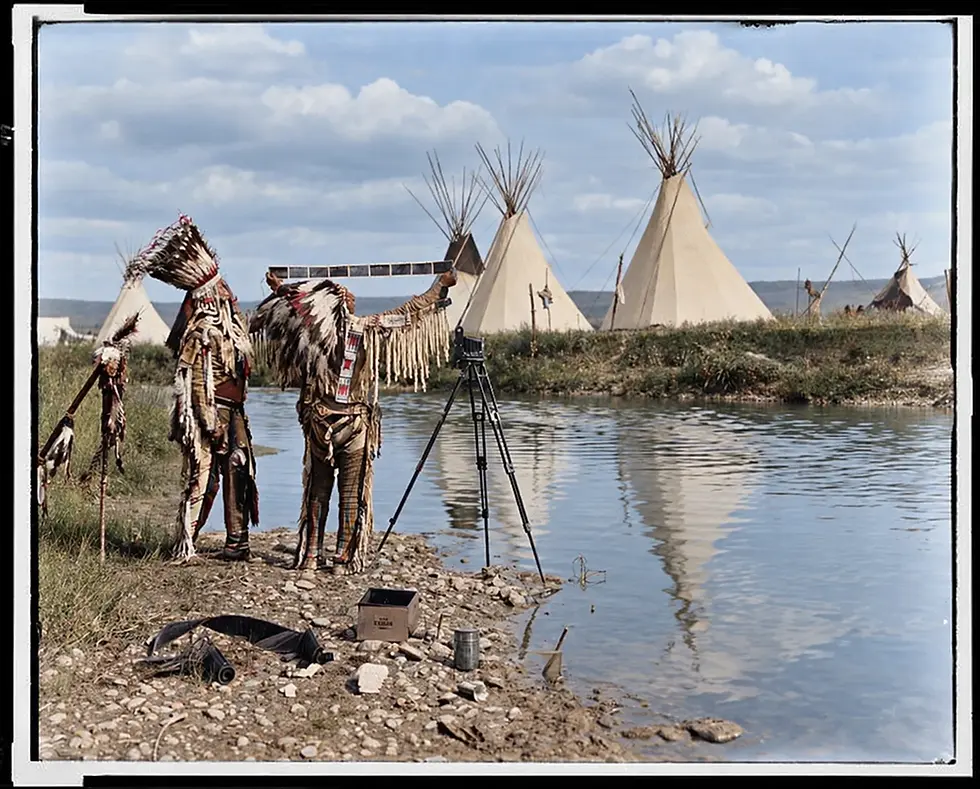
For more than a century, Native people have appeared throughout American film, especially in Westerns. Yet the people writing those stories, directing the actors, and deciding what audiences would see were usually not Indigenous. Native characters were often placed safely in the past, while the lives being lived in Native communities in the twentieth and twenty-first centuries received far less attention.
That imbalance helped create a strange disconnect. Indigenous painters, photographers, musicians, writers, and other artists have continually documented the lives of their communities, but movies became one of the most influential ways Americans learned to picture Native people. When so many of those films stopped somewhere in the nineteenth century, they left generations of viewers with an incomplete picture of Indigenous life.
Filmmaking also had an unusually high barrier to entry. Cameras, film stock, editing equipment, crews, financing, and distribution were expensive. That began to change as digital filmmaking made professional equipment more accessible and as Indigenous filmmakers gained greater access to film programs, production experience, and independent distribution.
Blackhorse Lowe came into filmmaking during that transition, although his career now spans more than two decades. A filmmaker from the Navajo Nation, Lowe grew up on a farm outside Farmington, New Mexico. His mother taught Navajo language curriculum, while his father worked as a mechanic and conducted Native American Church ceremonies. Traditional stories, family stories, ceremonies, music, and movies were all part of the world around him.
His family also loved movies. Lowe remembers watching Sergio Leone Westerns, The Godfather, Mad Max, David Lynch films, science fiction, and other genre movies alongside the stories and teachings he was receiving at home. Rather than separating those influences, Lowe brought them together. His work can move between ceremony, punk music, relationships, dark humor, spirituality, reservation life, and the vast landscapes of the Southwest without treating any one of them as the definition of what a Native film is supposed to be.
“I want to show people something they haven’t seen before and give them an experience of something they haven’t tried.” — Blackhorse Lowe, Sundance Institute
Blackhorse Lowe, A Story Told from Within
Lowe’s 2009 short film Shimásáni takes place on the Navajo reservation in 1934. Mary Jane, a young Diné woman living with her grandmother, must decide whether to remain at home and continue the life she knows or seek something different beyond the mountain. Lowe wrote and directed the 15-minute black-and-white film, which premiered at the Tribeca Film Festival and later screened at Sundance.
The setting is historical, but the perspective is important. Mary Jane and her grandmother are not background characters in someone else’s journey through the Southwest. The decision facing Mary Jane belongs to her, her family, and the world in which she lives. The reservation is home rather than scenery.
That distinction runs throughout Lowe’s films. His feature debut, 5th World, follows two young Navajo people hitchhiking across the reservation and premiered at Sundance in 2005. Chasing the Light follows a struggling screenwriter through depression, friendships, drugs, and memories of a failed relationship. His 2019 film Fukry is a self-described “doom rom-com” about Native men and women navigating love in Albuquerque. These are Native stories, but they are also road movies, romances, comedies, dramas, and experiments in style.
That freedom is part of what makes Lowe’s work interesting. He does not seem particularly interested in making Indigenous characters represent all Indigenous people. They are allowed to be specific, messy, funny, romantic, self-destructive, spiritual, or strange. They are people first, not symbols created to explain Native America to somebody else.
Reservation Dogs Changes the Scale
A much larger audience encountered Lowe’s work through FX’s Reservation Dogs. Co-created by Sterlin Harjo and Taika Waititi, the series follows four Indigenous teenagers growing up in rural Oklahoma. Rather than treating Native identity as the subject of every episode, the show lets its characters deal with friendship, grief, family, boredom, dreams, jokes, elders, community, and the occasional supernatural visitor.
Lowe wrote and directed multiple episodes of the series. For a filmmaker who had spent years making independent work grounded in Native communities and the Southwest, Reservation Dogs provided a much larger television audience without requiring him to abandon that perspective. His television work has since included episodes of Big Sky, Blindspotting, Joe Pickett, and Outer Range. In 2024, Lowe received a United States Artists Fellowship.
The significance goes beyond seeing more Native actors on screen. A director decides where the camera looks and how long it stays there. Writers decide which conversations audiences hear. Editors determine the rhythm of a scene. Together, those decisions shape whether Native people appear as subjects being observed from the outside or as people whose world the audience has been invited to enter.
Lowe’s films make room for things that older Hollywood depictions rarely did. Native people can fall in love, make bad decisions, listen to punk music, joke with friends, confront addiction, participate in ceremony, argue with family, remember the past, and wonder what comes next. None of those experiences cancels out the others.
That may be the larger change taking place in Indigenous filmmaking. The question is no longer simply whether Native people appear on screen. Increasingly, it is who gets to tell the story, who decides what the camera sees, and whose point of view guides the audience once the film begins.
Blackhorse Lowe has been answering that question for more than twenty years by pointing the camera toward a Native world that was always there.
Sources
Blackhorse Lowe — Official BiographyBlackhorse Lowe official website
Vision & Voice: Navajo Filmmaker Blackhorse Lowe on Making His “Own Weird Kind of Cinematic Mutant” — Sundance InstituteSundance Institute interview with Blackhorse Lowe
Blackhorse Lowe — Short FilmsBlackhorse Lowe short-film archive
Blackhorse Lowe — Feature FilmsBlackhorse Lowe feature-film archive
Reservation Dogs — FX/HuluReservation Dogs official series page