What Is in a Name? Native Places in Arizona

Flagstaff, Winslow, Page, Kayenta and Lake Powell are names many of us know. Their Diné names offer another way to recognize the Arizona landscape and remember that these places had stories, relationships and names long before today's maps were drawn. With 22 federally and state recognized tribes, you will a variety of names for landmarks in Arizona.
A small sign at the Museum of Indigenous People can make a familiar map look different. It lists places many Arizonans have driven through, visited or passed on the way somewhere else: Lake Powell, Page, Flagstaff, Kayenta and Winslow. Next to each is a name in Diné Bizaad. The places have not changed, but once another name is visible, it becomes harder to think of the name on the highway sign as the only one that has ever mattered.

The sign is especially interesting because the names are not all descriptions of an untouched landscape from centuries ago. Kinłání, the Diné name shown for Flagstaff, is translated on the display as “many houses.” Béésh Sinil, used for Winslow, refers to “iron lying in place” and is connected on the sign to stacked railroad rails. Page appears as Na’ní’á Hótsaa, “big dam.” These are reminders that Diné Bizaad is a living language. As towns, railroads and dams became part of the Southwest, Diné people continued describing the world around them.
That makes learning the names less like memorizing vocabulary and more like being introduced to another way of seeing a place you already know.
The last four names carry us beyond Arizona into New Mexico and Colorado, but that is part of the story too. The lines separating Arizona, New Mexico, Utah and Colorado are relatively recent political boundaries. Diné Bikéyah and Diné communities extend across that Four Corners landscape, so language does not suddenly stop when a traveler crosses a state line.
There is also something wonderfully ordinary about some of these names. They talk about houses, water, a bridge, railroad iron and a dam. That everyday quality matters. Indigenous cultures are often presented to visitors through the distant past, as if Native languages are useful mainly for interpreting archaeological sites or old objects. A sign like this quietly pushes against that idea. A living language can hold old teachings and still have words for what arrived yesterday.
Native Places in Arizona with Meaning
Arizona has another familiar example in Piestewa Peak. For much of the twentieth century, the Phoenix mountain carried a name containing a racist and sexist slur directed at Indigenous women. Native people in Arizona had been asking for that name to change for years before Army Specialist Lori Ann Piestewa was killed in Iraq in 2003. Piestewa was Hopi and Mexican American, from Tuba City, and the mother of two young children. Arizona renamed the mountain for her in 2003, and the federal government formally adopted Piestewa Peak in 2008. MIP explored that history more fully in The Peak We Call Piestewa.
That story is worth remembering because not every name change means the same thing. In this case, a degrading term for Indigenous women was replaced by the name of one particular Indigenous woman: a daughter, mother, athlete and soldier from Arizona. The newer name does not make the older O’odham history of the mountain disappear. It adds Lori Piestewa's life to a landscape that already carried histories long before either English name appeared.
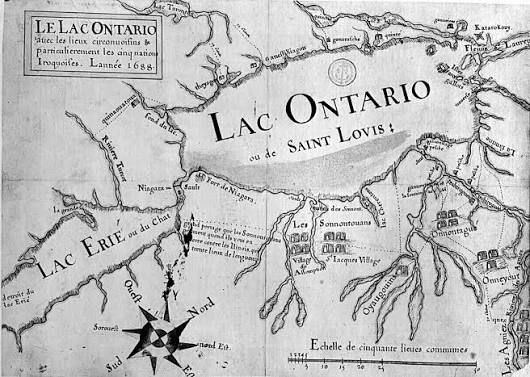
Elsewhere, the pattern can work in the opposite direction. Denali comes from Koyukon Deenaalee and is one of several Alaska Native names for North America's highest mountain. The federal government recognized Denali as the mountain's name in 2015 and returned to Mount McKinley for federal use in 2025, while Denali National Park and Preserve kept its name. Ontario is different again because the familiar name itself is Indigenous-derived; in August 2026, an executive order directed U.S. federal agencies to call Lake Ontario “Lake America.”
Even New Mexico carries a naming history that is easy to misunderstand. It was not named after the modern country of Mexico. Nuevo México had already been used for this part of the Southwest for centuries when Mexico became independent in 1821. An archived University of New Mexico history notes that by the time the United States organized New Mexico Territory in 1850, the name had already been used for the region for more than 270 years. President Trump promoted the idea of renaming the state “New America” in September 2026, but it remains a proposal rather than an official change to the state's name.
Those examples are useful because they bring us back to the same question raised by the little sign at MIP: when we learn the name of a place, how much of its story are we actually learning?

Learning Where We Are
Native Places in Arizona; Maybe the next time you head north toward Flagstaff, Kinłání will come to mind. When you pass through Winslow, you might remember Béésh Sinil and the railroad iron embedded in its Diné name. Page and Lake Powell may look a little different after knowing that people describe those places through another language and another history.
Learning these names does not mean that every familiar English name needs to disappear. It means recognizing that the map we grew up with is not the only map of this place. Arizona is home to many Tribal Nations, languages and homelands, and each carries relationships to places that existed before Arizona became a territory, before it became a state and before most of the names now printed on road signs appeared.
That is part of why this conversation belongs at the Museum of Indigenous People. MIP is in Prescott, within Yavapai homelands, where the Yavapai-Prescott Indian Tribe remains a living community today. The Tribe describes its people and ancestors as having lived in central and western Arizona for centuries.
A land acknowledgment has meaning only when we keep learning what we are acknowledging. That includes knowing whose homelands we are visiting, learning the names of the Nations connected to them, listening to the languages still spoken there and resisting the habit of placing Native people entirely in the past.
Sometimes that learning can begin with something very small.
A sign on a museum wall. A road we have driven a hundred times. A name we have heard all our lives, followed by another name we are only beginning to learn.